- Apr 20
Headaches: What’s Really Going On (and What To Try)
- The Joyful School Nurse
- 0 comments
If you spend any time in a classroom, you’ve heard it more than once…
“Can I go to the nurse? My head hurts.”
And if you’re thinking again?, you’re not alone.
Headaches are one of the most common reasons students visit the health office, but they’re also one of the most misunderstood. There’s rarely just one clear cause. Most of the time, it’s a combination of factors building up throughout the day.
So… why do kids get headaches at school?
Sometimes it’s stress or anxiety. School pressure, social struggles, or things happening at home can show up physically, and for many kids, that looks like a headache.
Other times, it’s the start of an illness. A headache can be the first sign of a cold, flu, or sinus infection before anything else becomes obvious.
Then there are the everyday habits that sneak up on kids:
Not enough sleep
Skipping meals
Not drinking enough water (especially after recess or PE)
Add in eyestrain from screens or possible vision issues, and it’s easy to see why headaches show up so often.
And sometimes it’s the environment itself… bright lights, loud noise, strong smells, allergens, or even weather changes. For some students, there may also be food triggers, hormonal changes, or a family history of headaches or migraines.
In other words… it’s not just one thing.
What’s happening in the health office?
When a student comes in with a headache, it’s not just about making it go away.
School nurses are looking at the bigger picture. We’re tracking patterns, checking for other symptoms, and trying to figure out what might be behind it. Sometimes what seems like a simple headache is actually the beginning of something more.
That’s one of the reasons medication isn’t always the first step.
Instead, we often start with simple supports:
Hydration
A snack if needed
A few minutes of rest
Deep breathing
An ice pack
You’d be surprised how often those small things are enough.
Medication can mask important symptoms like a developing fever or sore throat, which is why we’re thoughtful about when it’s used.
And I’ll also say this, because I know it always comes from a place of wanting to help…
When a pass says “please give medicine” there are guidelines we have to follow. Medications are only provided when they’re ordered and on file, some students have health conditions or allergies that don't allow for medication, some students already had a dose of something before school... there is a lot of detective work that goes into our decision. Unless a student has a specific health plan, your school nurse is using clinical judgment to decide what’s appropriate and safe.
When should you send a student right away?
Trust your gut here. You know your students.
Go ahead and send them if:
The headache is severe
There was a recent head injury
They look unwell
There is vomiting, dizziness, or vision changes
What can help in the classroom?
Before sending a student out, a quick reset can make a big difference.
Try:
Offering water
Asking if they’ve eaten and offer a snack
Encouraging some slow, deep breaths
Sometimes that’s all it takes to stop a headache before it gets worse.
These small steps also help students start to understand their own bodies and build a little independence along the way.
A simple tool to make this easier
If you want to take the guesswork out of those moments, I’ve created a classroom headache poster that walks students through what to try first before heading to the nurse.
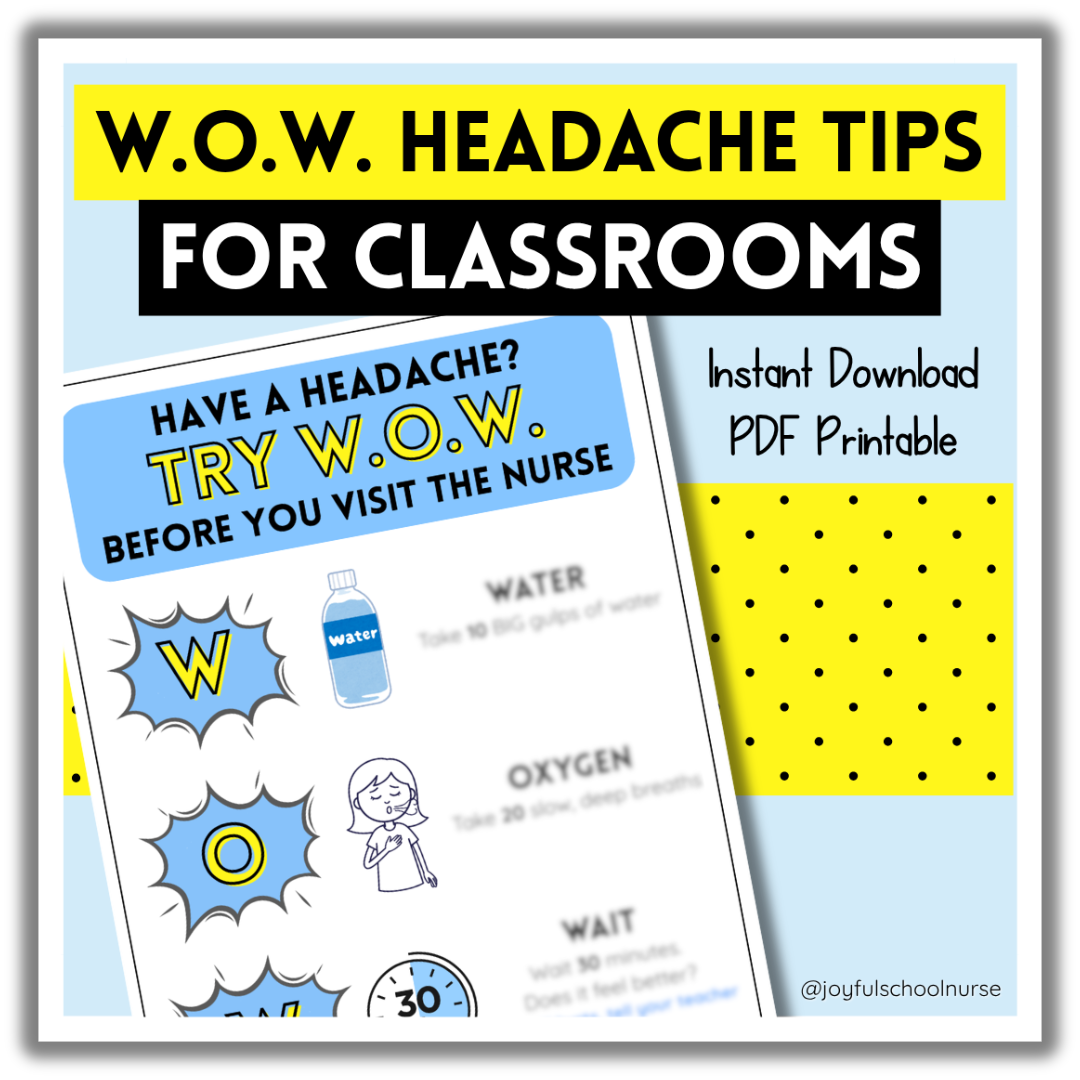
It supports your students without adding more to your plate… and helps cut down on those “my head hurts” interruptions that just need a quick fix.
You can find it HERE.
Stay Connected!
Get practical support, thoughtful insights, and classroom-friendly health tips, delivered straight to your inbox.
When you join, you’ll receive:
Clear guidance for everyday student health concerns
Time-saving tools and strategies for your classroom
Encouragement from someone who understands your day-to-day